Key Takeaways
-
1
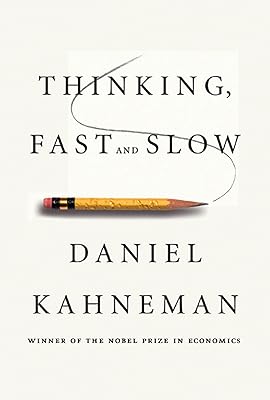
The book explains how cognitive biases systematically distort our thinking and lead to poor decisions. Rather than being rare errors, these biases are predictable mental shortcuts that affect everyone. By recognizing them, we can reduce their influence and make more rational choices. Awareness is the first step toward clearer thinking.
-
2
Humans tend to prefer simple stories over complex truths, which makes us vulnerable to narrative fallacies. We create coherent explanations for random events, even when none exist. This tendency can distort our understanding of success, failure, and cause-and-effect relationships. Questioning tidy explanations helps us approach reality more accurately.
-
3
Overconfidence is one of the most pervasive and dangerous biases. We consistently overestimate our knowledge, abilities, and predictions about the future. This leads to excessive risk-taking and flawed planning. Adopting humility and seeking disconfirming evidence can counteract this tendency.
-
4
Social influences powerfully shape our decisions, often without our awareness. From herd behavior to authority bias, we tend to conform to group opinions or defer to perceived experts. While social cues can be useful shortcuts, they often suppress independent thinking. Deliberate skepticism can help maintain autonomy.
-
5
Loss aversion demonstrates that we fear losses more than we value equivalent gains. This emotional asymmetry can lead to irrational financial and personal decisions. We may hold onto bad investments or avoid beneficial risks to escape the pain of losing. Evaluating decisions based on long-term value rather than short-term emotion improves outcomes.
-
6
Confirmation bias causes us to seek and interpret information that supports our existing beliefs. We ignore or downplay contradictory evidence, reinforcing false or incomplete views. This bias strengthens polarization and flawed reasoning. Actively searching for opposing viewpoints fosters more balanced judgment.
-
7
The book highlights the dangers of survivorship bias in evaluating success stories. We tend to focus on visible winners while ignoring the many unseen failures. This skews our understanding of probability and effort. Studying failures alongside successes gives a more realistic picture.
-
8
Anchoring influences how we make estimates and judgments by relying heavily on initial information. Even arbitrary numbers can shape subsequent decisions. This bias affects negotiations, pricing, and forecasting. Being aware of anchors allows us to recalibrate and seek independent benchmarks.
-
9
Reciprocity and social obligations can manipulate our behavior more than we realize. When someone gives us something, we feel compelled to return the favor, even if it’s not in our best interest. Marketers and negotiators often exploit this instinct. Recognizing the tactic helps preserve rational choice.
-
10
Clear thinking requires conscious effort and structured reflection. Many biases operate automatically and cannot be eliminated entirely. However, implementing checklists, slowing down decisions, and inviting critical feedback can reduce errors. Rationality is less about intelligence and more about disciplined thinking habits.
Concepts
Confirmation Bias
The tendency to search for, interpret, and remember information that confirms preexisting beliefs while ignoring contradictory evidence.
Example
Reading only news sources that align with your political views Interpreting ambiguous data as support for your existing hypothesis
Overconfidence Effect
The tendency to overestimate one's knowledge, accuracy of predictions, and personal abilities.
Example
Believing you can consistently beat the stock market Underestimating how long a project will take to complete
Loss Aversion
The psychological principle that losses feel more painful than equivalent gains feel pleasurable.
Example
Refusing to sell a declining stock to avoid realizing a loss Declining a fair bet because the potential loss feels too painful
Anchoring
The cognitive bias of relying too heavily on the first piece of information encountered when making decisions.
Example
Negotiating a salary based on the first number mentioned Assuming a discounted price is a bargain because of a high original price
Herd Behavior
The tendency to follow and mimic the actions of a larger group, often ignoring personal judgment.
Example
Buying a stock because everyone else is investing in it Choosing a busy restaurant assuming it must be better
Survivorship Bias
The error of focusing on successful outcomes while overlooking failures that are less visible.
Example
Studying only successful entrepreneurs to learn about business success Assuming a strategy works because you only hear about the winners
Narrative Fallacy
The tendency to create coherent stories to explain random or complex events.
Example
Attributing a company's success solely to a charismatic CEO Explaining market crashes with simple cause-and-effect stories
Authority Bias
The tendency to attribute greater accuracy or wisdom to the opinion of an authority figure.
Example
Following medical advice without questioning conflicting evidence Agreeing with a CEO’s decision because of their status
Reciprocity
The social norm of responding to a positive action with another positive action, sometimes irrationally.
Example
Buying something after receiving a free sample Feeling obligated to help someone who previously helped you
Availability Heuristic
The tendency to judge the likelihood of events based on how easily examples come to mind.
Example
Overestimating plane crash risks after seeing news coverage Assuming crime is rising because of frequent media reports
Sunk Cost Fallacy
The inclination to continue an endeavor once an investment in money, effort, or time has been made.
Example
Staying in a failing project because of past investment Finishing a bad movie because you paid for the ticket
Outcome Bias
The error of judging a decision based solely on its outcome rather than the quality of the decision at the time it was made.
Example
Praising a risky investment decision because it happened to succeed Blaming a well-researched decision because it led to a bad result